GitZoid vs CodeRabbit: an honest comparison
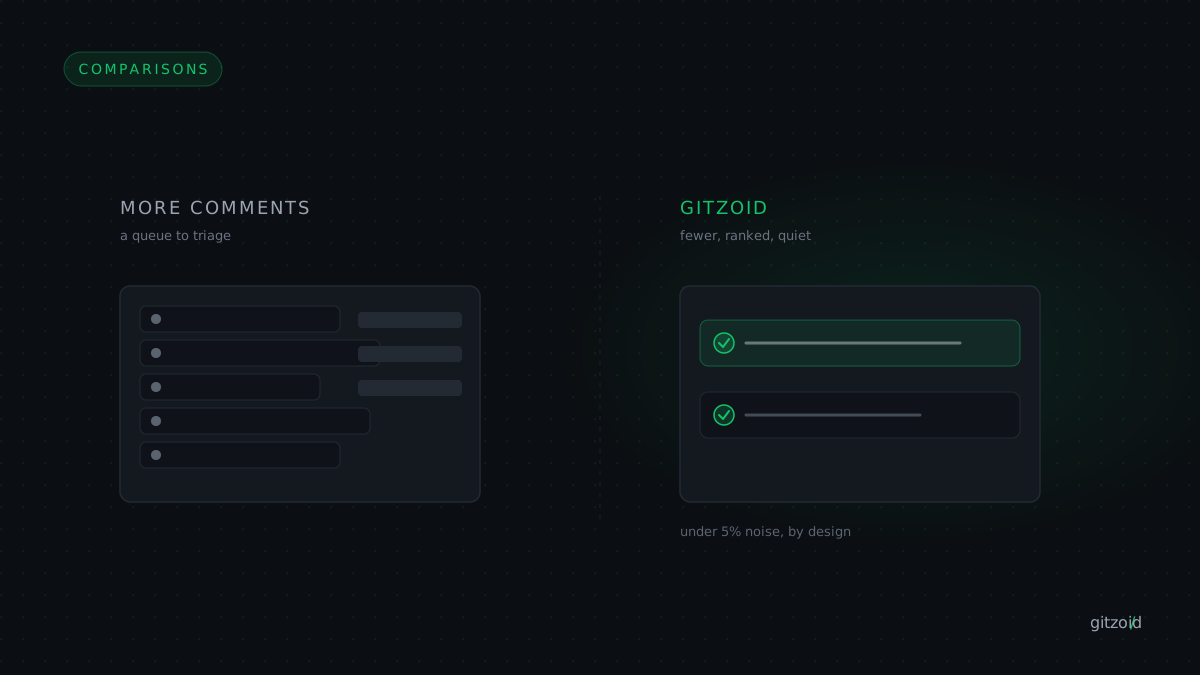
Two tools in one category, making different bets. CodeRabbit bets on depth and breadth: the most integrations, the most platforms, the most surface. GitZoid bets on restraint: one flat price, high-severity findings only, and email patrols that manage the work between pull requests. Neither bet is wrong. They fit different teams.
Here is the comparison at a glance, before the detail below.
| Dimension | CodeRabbit | GitZoid |
|---|---|---|
| Pricing | Per seat, $24 per user per month billed annually | Flat $19 a month, up to 50 repos, every contributor |
| Review volume | Full coverage, higher comment volume | High-severity findings only, under 5% noise by design |
| Platforms | GitHub, GitLab, Azure DevOps | GitHub-native today |
| Tooling | 40+ integrated linters and analyzers | One per-repo brain, no plugin surface |
| IDE review | Yes, before a pull request exists | Starts at the pull request |
| Between pull requests | Dashboards and reports | Security Watch and a Monday digest, by email |
| Configuration | Deep configuration layer | Fixed, opinionated defaults |
| Framing | Gates one pull request at a time | Manages the stream of work your agents ship |
What each tool is
CodeRabbit is the category leader and the most-installed AI app on the GitHub Marketplace. It reviews pull requests, integrates 40+ linters and analyzers, and works beyond GitHub, on GitLab and Azure DevOps. It is a mature product with a large surface: in-editor review, dashboards, reports, a deep configuration layer.
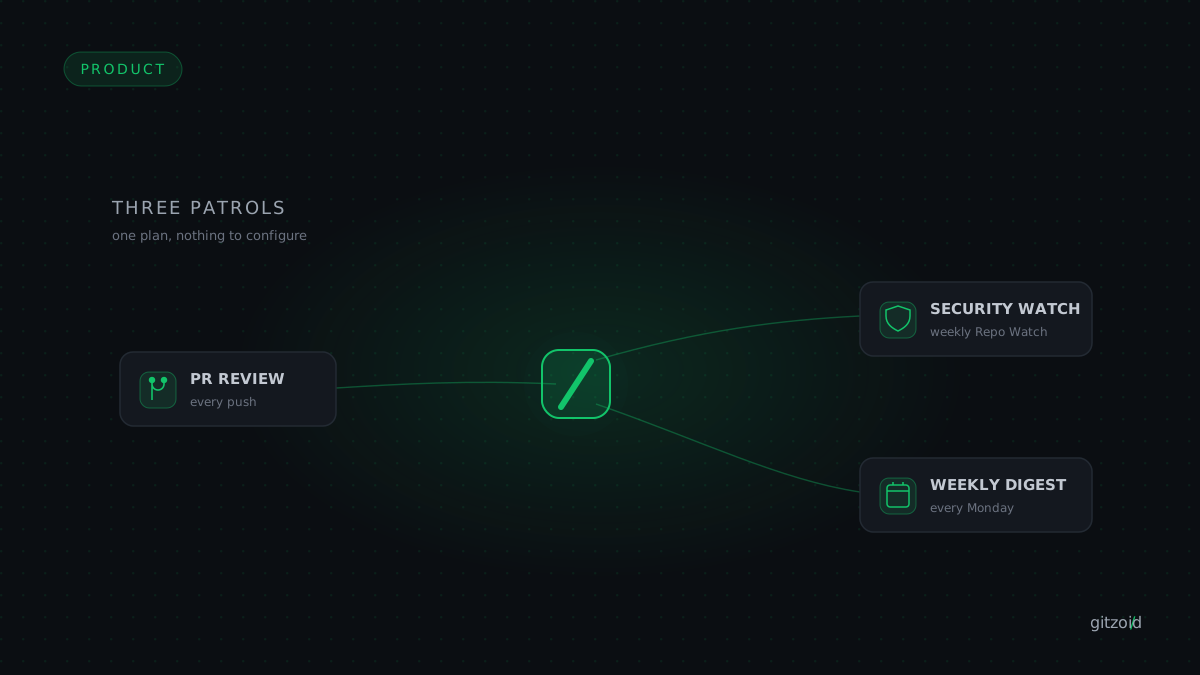
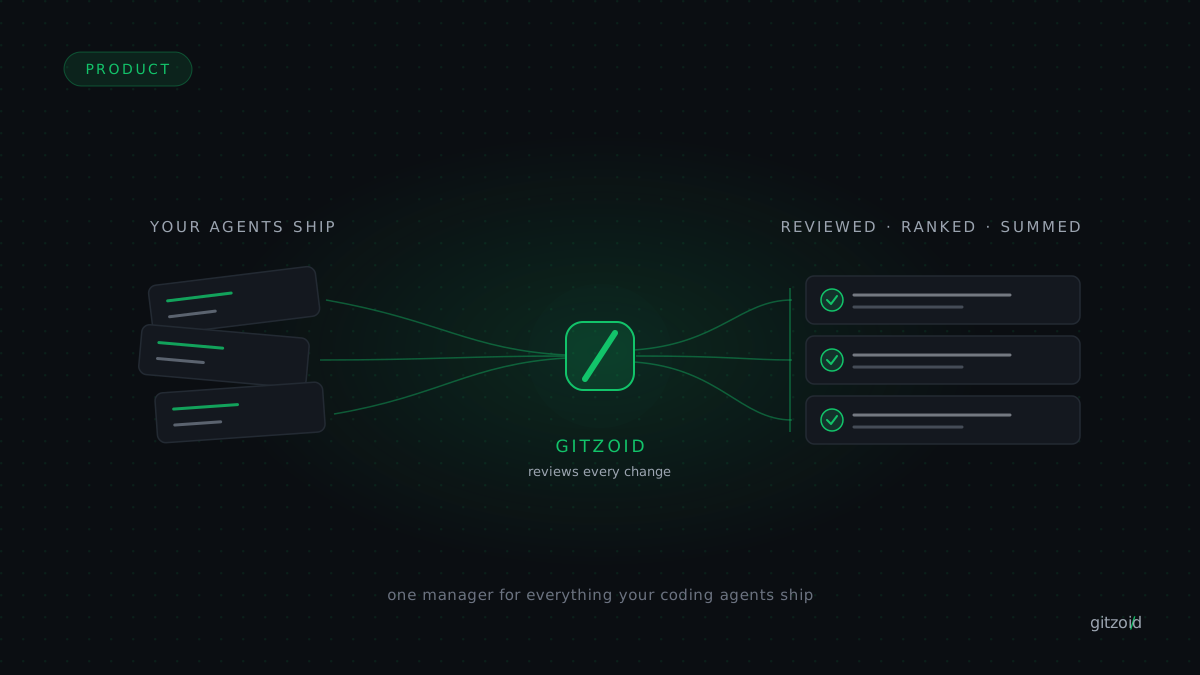
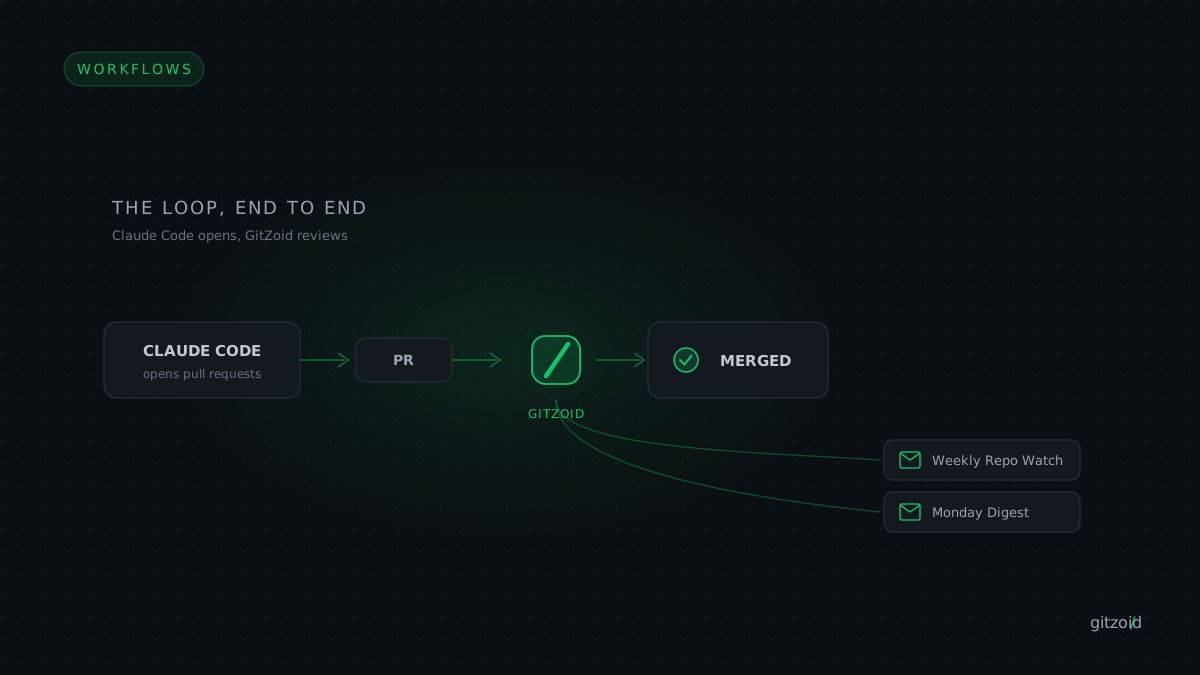
GitZoid is the product manager for your coding agents. It reviews every change against a per-repo brain, keeps its comments to real, high-severity findings, and runs two email patrols on top: Security Watch weekly and a Monday digest of what shipped. It runs on a deterministic engine, and its output lands where you already work, in GitHub and email.
Where CodeRabbit is genuinely stronger
Worth conceding plainly.
- Maturity and distribution. CodeRabbit has been at this longer and holds the top spot on the GitHub Marketplace. That track record is real.
- Platform breadth. CodeRabbit runs on GitLab and Azure DevOps. GitZoid is GitHub-only today. If your code lives elsewhere, the comparison ends here.
- Tooling depth. 40+ integrated linters and analyzers surface a wide class of issues in one place, with security scanning available from the Pro tier.
- IDE surface. CodeRabbit reviews inside the editor before a pull request exists. GitZoid starts at the pull request.
- Larger teams. A team standardizing review workflows across many contributors gets more from CodeRabbit's configuration surface than from GitZoid's fixed defaults.
Where GitZoid is different
- Flat price. $19 a month covers up to 50 repos and every contributor on them. CodeRabbit is per seat: $24 per user per month billed annually ($30 monthly), $48 for Pro Plus. Ten people on Pro is $240 a month there and $19 here.
- Quiet by design. The most common public complaint about CodeRabbit is review comment volume. GitZoid reviews every pull request and keeps it low-noise: real, high-severity findings surface, the rest is folded away, under 5% noise by design.
- Patrols between pull requests. Security Watch audits your code for exploitable paths and scans your dependencies, then emails one ranked report a week. The Monday digest summarizes what your agents shipped. Both are included in the flat price, not an add-on.
- PM framing. CodeRabbit gates one pull request at a time. GitZoid manages the stream of work: reviews the changes, watches the risk surface, reports the week.
Pick CodeRabbit if
- Your code lives on GitLab or Azure DevOps.
- You want in-editor review and a deep configuration surface.
- Your team leans on its linter and analyzer integrations.
- You want a free tier and a 14-day trial to evaluate against per-seat pricing.
Pick GitZoid if
- Your agents open more pull requests than your team can read closely.
- You want a flat $19 price that does not scale with headcount.
- You want fewer, higher-severity comments instead of full coverage.
- You want the security and digest work delivered to your inbox, not another dashboard to watch.
No benchmark table here, on purpose. Review quality is repo-dependent, and both tools give you a free way to test on your own code: CodeRabbit through its free tier and trial, GitZoid through the first 10 outputs free with no card required. Run both on a real repo for a week and keep the one your team reads.