Reviewing AI-generated code before it merges
The share of code written by models is climbing fast. That shifts where the risk lives. Generation is no longer the bottleneck. Review is. The question for most teams is no longer how to write more code, it is how to govern the code that arrives.
The new failure mode
AI-authored changes are fluent. They read well, they pass a quick skim, and they often pass tests. What they miss is local context: the invariant that is enforced three files away, the helper that already exists and should have been reused, the subtle contract on a function's inputs.
A reviewer skimming a tidy diff is exactly the wrong defense against tidy, wrong code.
The diff looks fine because it is fluent, not because it is correct.
| What AI pull requests pass | What they still miss |
|---|---|
| A quick human skim | An invariant enforced three files away |
| The test suite | A helper that already exists and should be reused |
| Style and lint checks | A subtle contract on a function's inputs |
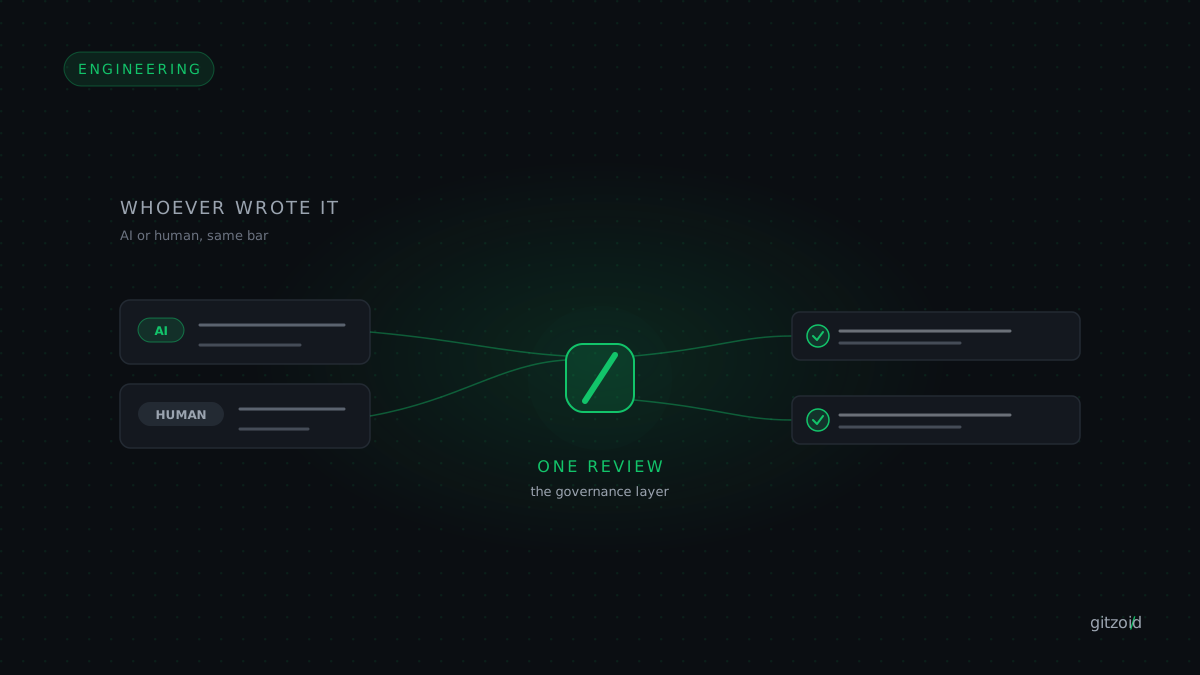
Same brain, same bar
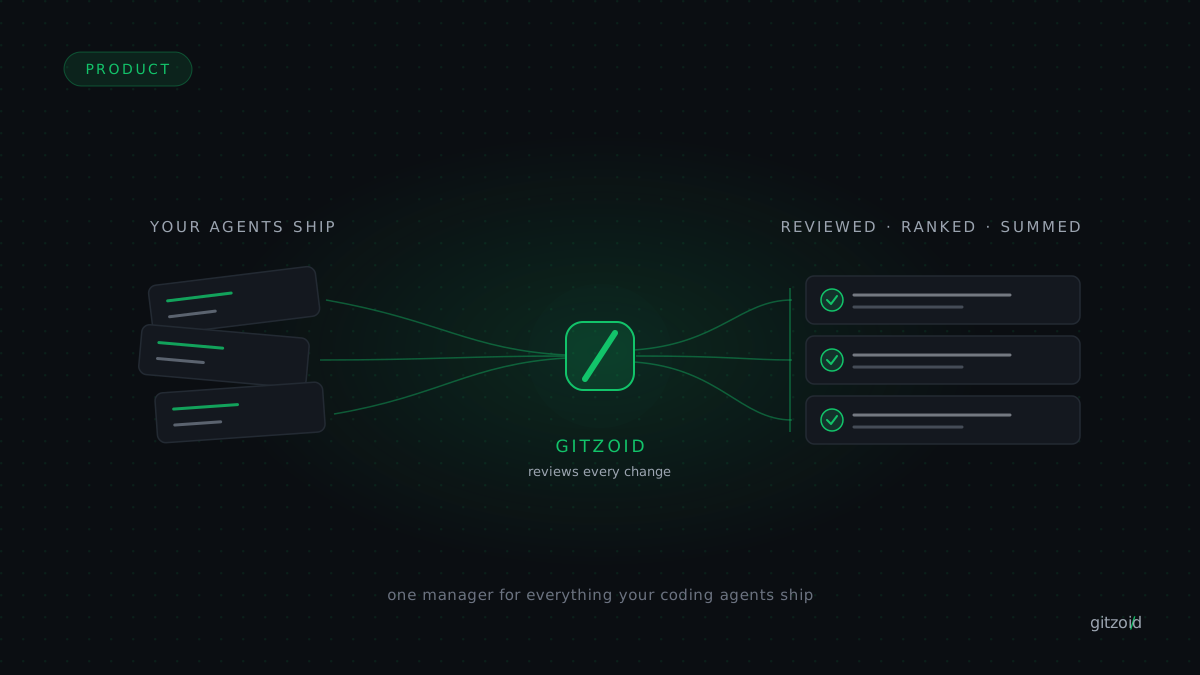
GitZoid does not treat AI-generated pull requests differently. It reads them against the per-repo brain, the same way it reads human changes. The model that wrote the patch did not see your whole repository. GitZoid did. That asymmetry is the point.
What that catches in practice:
- Reimplementations of logic that already exists in the codebase.
- Changes that satisfy the test but violate an invariant the test does not cover.
- Inputs that reach a sink without passing the validation the rest of the repo uses.
Governing at the speed of generation
The goal is not to slow teams down. It is to keep the merge bar constant while the volume of changes goes up. Review is the layer where that bar lives. GitZoid runs it on every pull request, so a faster keyboard does not quietly become a lower standard.